
basic teaching
Our teaching resources for basic education
Educational films: Exploring space with Paxi
Join Paxi, the ESA mascot, on his cosmic adventures! Through educational films, join Paxi as he explores the solar system, learns about the climate and discovers Earth sciences. These engaging, fun and informative videos are perfectly suited to sparking the curiosity...
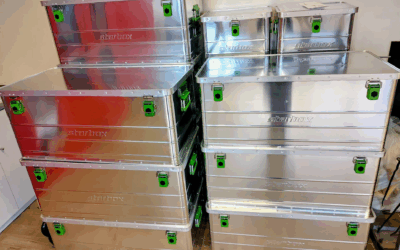
Educational kit
As part of the " Wees de schonn " project, carried out in collaboration with the French Ministry of Education, Children and Youth, ESERO resources were selected and adapted to design an educational suitcase dedicated to space science, intended for non-formal...
A constitution for the Moon
In this resource, students will debate some of the organizational and social features of a future colony on the Moon, and make connections with their local community. Students will be guided through the activity by a series of debate questions,...

Clean up the space
How can we capture debris in space? In this educational resource, we'll learn how to make our own tentacle-shaped robotic arm that will help us capture debris, represented by Lego pieces. We'll also compare different adhesive surfaces to help us...
Coming back to Earth safely
How can we slow satellites down so that they return to Earth? In this educational resource, we'll find out how the force of drag can help satellites slow down. We'll conduct an experiment using helicopter propellers and try to slow them down using...
Discovering life on Mars with a rover
A Mars rover must move itself and send information about Mars to Earth.But how does he know exactly what to do? A programmer writes a series of steps that the robot executes in sequence. For example, the Mars rover performs steps such as "deploy solar panels", "deploy...
Maths in space – Principia Mission – Pack 2
Ressources Matières: Mathematics Âge: 11-16 years Duration: 2 hours Resources Study of combinations, permutations, factorials and probabilities as part of Tim Peake's mission aboard the International Space Station (ISS). On December 15, 2015, European Space Agency...
Have we really been to the moon?
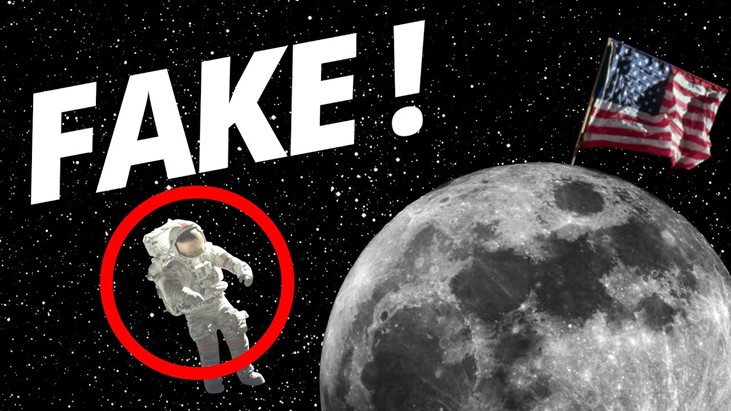
Ressources Indoor activity Matières: Citizenship, Critical Thinking, Science Âge: 11 - 12 years Duration: 2 hours Resources Have you ever heard anyone say that the moon landing was faked? It may seem hard to believe, but some people think that the 1969 Apollo 11...
Astrofarmer
Ressources Matières: Science, mathematics Level: medium Âge: 8 - 12 years Resources Learn about plant growth conditions In this series of six activities, students investigate the factors that affect plant growth and relate these to growing plants in space. Students...
Astronomy and the calendar
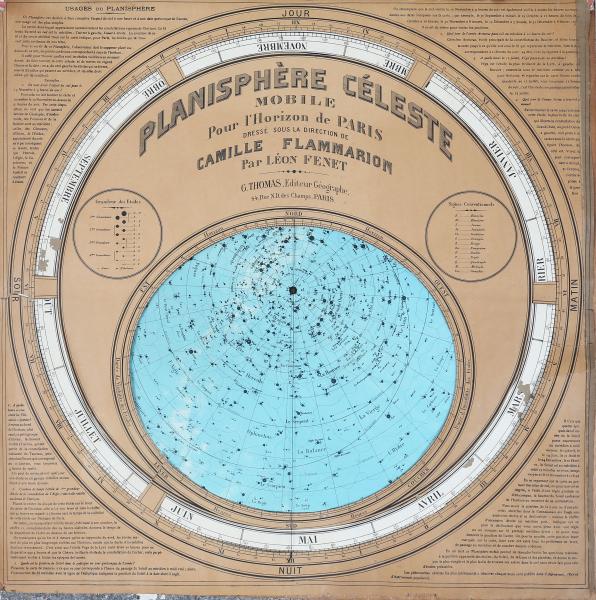
Ressources Matières: Science, mathematics, time management Âge: 8-12 ans Difficulté: medium Documents pour élèves et enseignants Inspire your students with astronomy in C3 and C4! This resource deals with mankind's oldest science: astronomy. It is deeply rooted in...
Weather or climate?
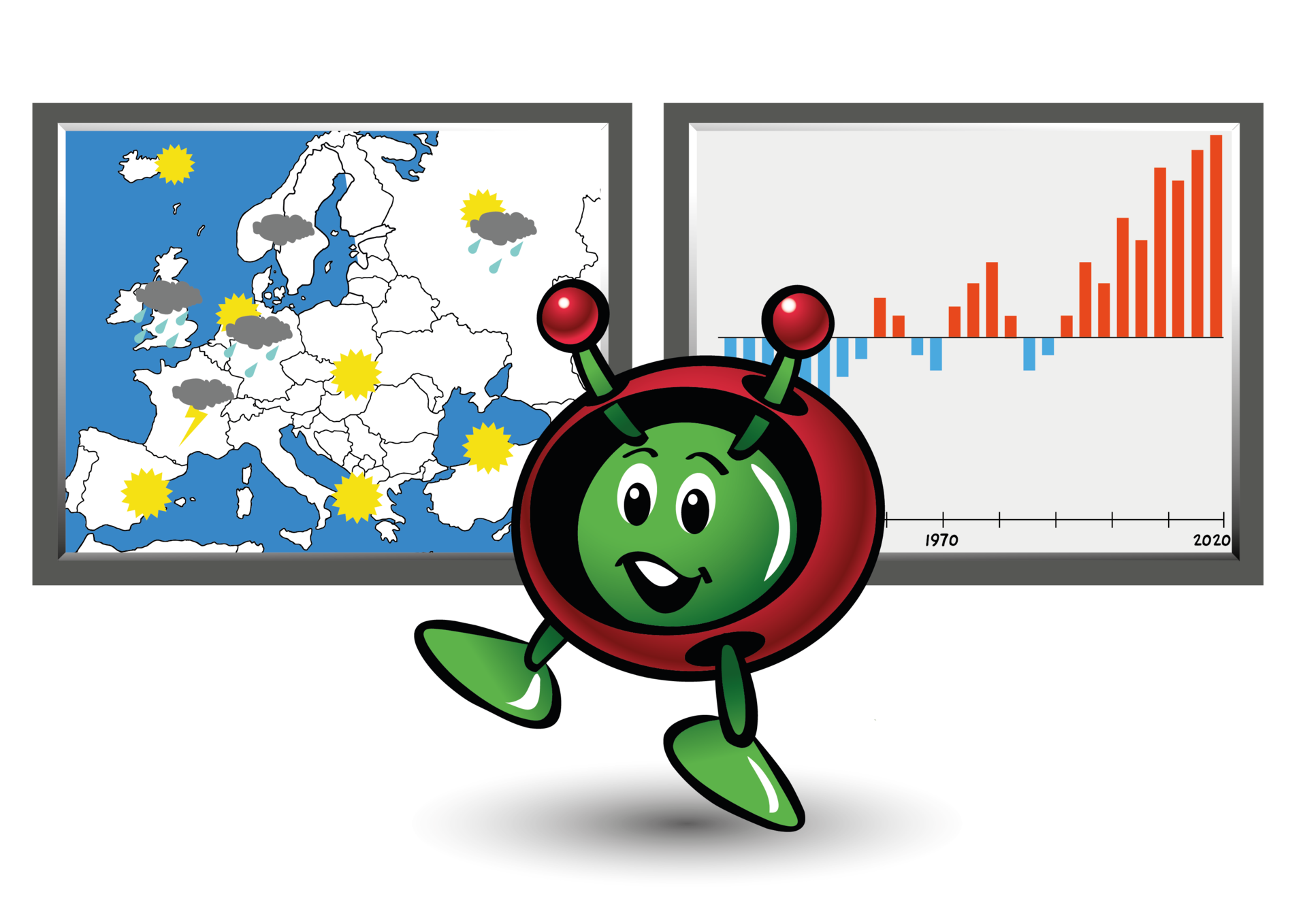
Ressources Matières: Science and mathematics Âge: 8-12 ans Degree of difficulty: Easy Documents for teachers and students Understanding the difference between weather and climate We often think that the concepts of weather and climate are identical. In this series of...
James Webb Space Telescope
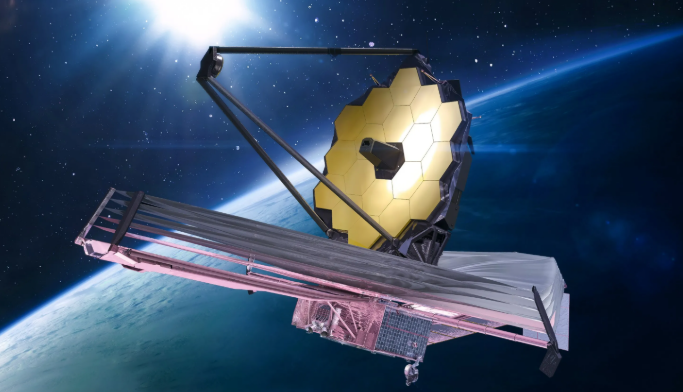
The JWST is the largest space telescope ever launched, capable of observing in the infrared with unrivalled sensitivity. The successor to Hubble, it explores the first galaxies formed after the Big Bang, studies the birth of stars and analyzes planetary systems in search of traces of life.
Launched on December 25, 2021 from French Guiana, the JWST is a partnership between NASA, ESA and the Canadian Space Agency.
OUR LATEST NEWS
Keep up to date with our news
Stay informed! Follow our news page to keep up to date with our Esero project. General news, teacher training or teaching resources, find all the news at Esero.
Back to School 2026-2027: amazing school projects to engage your students in STEM
Take your students’ learning beyond the classroom and into space! Together with the ESERO network, we offer a range of interdisciplinary school-level projects designed to engage and inspire students with hands-on activities connecting space to STEM learning. Climate...
20 years of ESERO: bringing space to millions of students
Caption: Celebrating 20 years of ESERO - Credit: ESA In 2006, ESA launched the first European Space Education Resource Office (ESERO) in the Netherlands. Its mission was clear and ambitious: support teachers to use the excitement of space...
105 water rockets launched at Kirchberg
3, 2, 1... Lift off! Water Rocket Challenge sets the European Lux I School alight Last week, Kirchberg's Central Park was transformed into a veritable space launch pad. As part of the Water Rocket Challenge, no fewer than 35 teams of students took up the...
We’ve built lunar bases
The Moon Camp project set up shop at the Luxembourg Science Center this week, welcoming around 60 children ready to take on one of mankind's greatest challenges: designing a habitable base on the Moon. Divided up into teams, the budding scientists had to demonstrate...